FT-6024GZ Fiber Laser Cutting Machine
The FT-6024GZ is a fiber laser tube cutting machine for buyers evaluating profile cutting, holes and cutouts in tubular components. The GZ catalogue lists several tube-length configurations and 3-20 kW laser options, which must be matched to the actual profile and production route.
| Product model | FT-6024GZ |
| Catalogue length configurations | 6 / 8 / 10 / 12 m; confirm selected machine |
| Laser power options | 3000 / 6000 / 12000 / 20000 W |
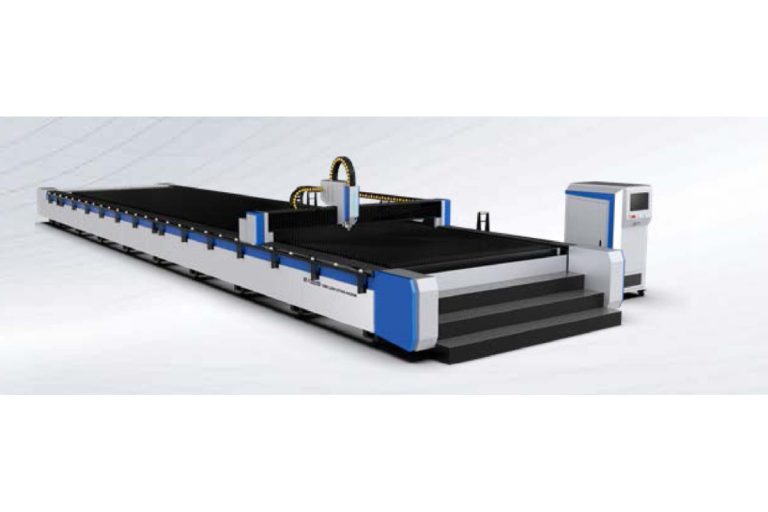
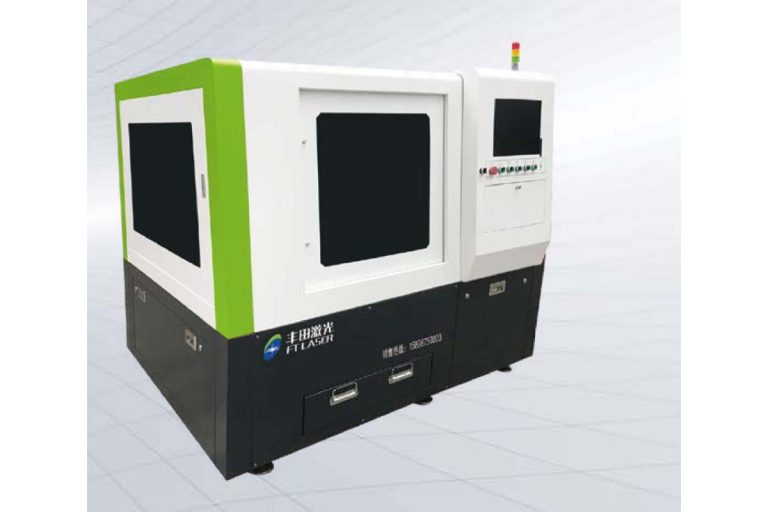
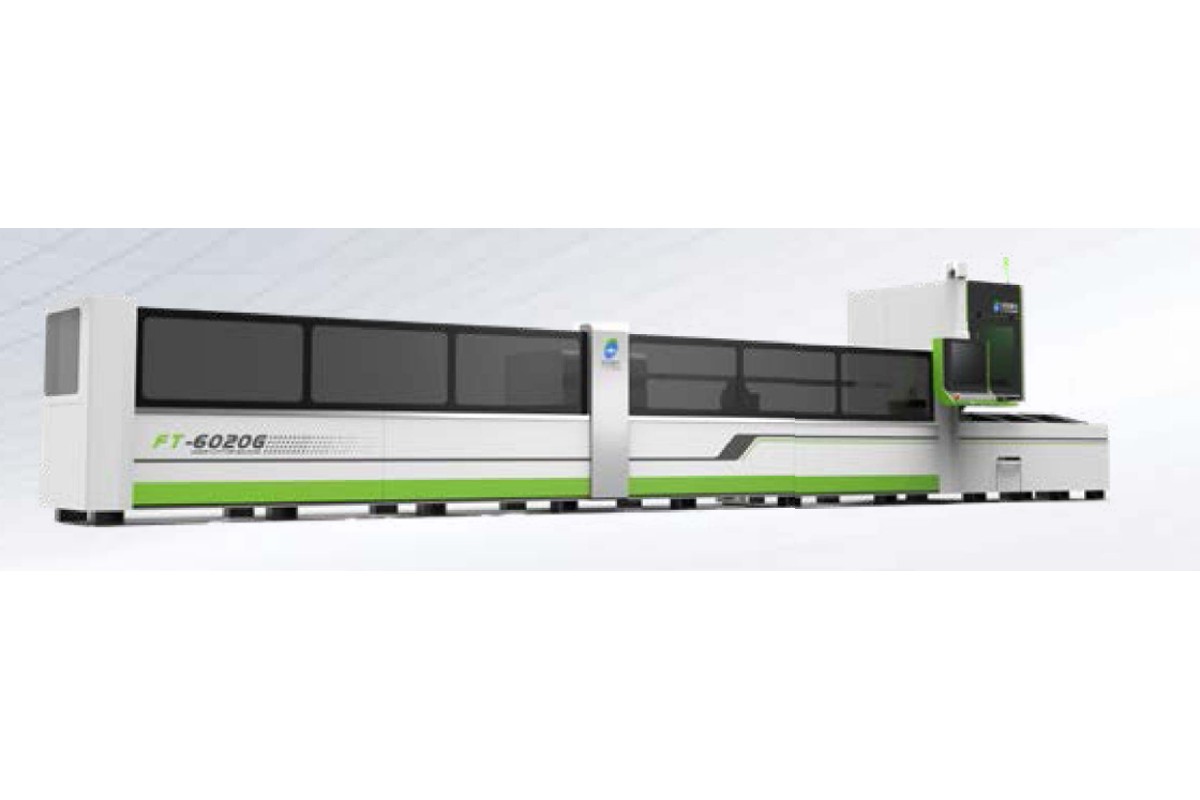
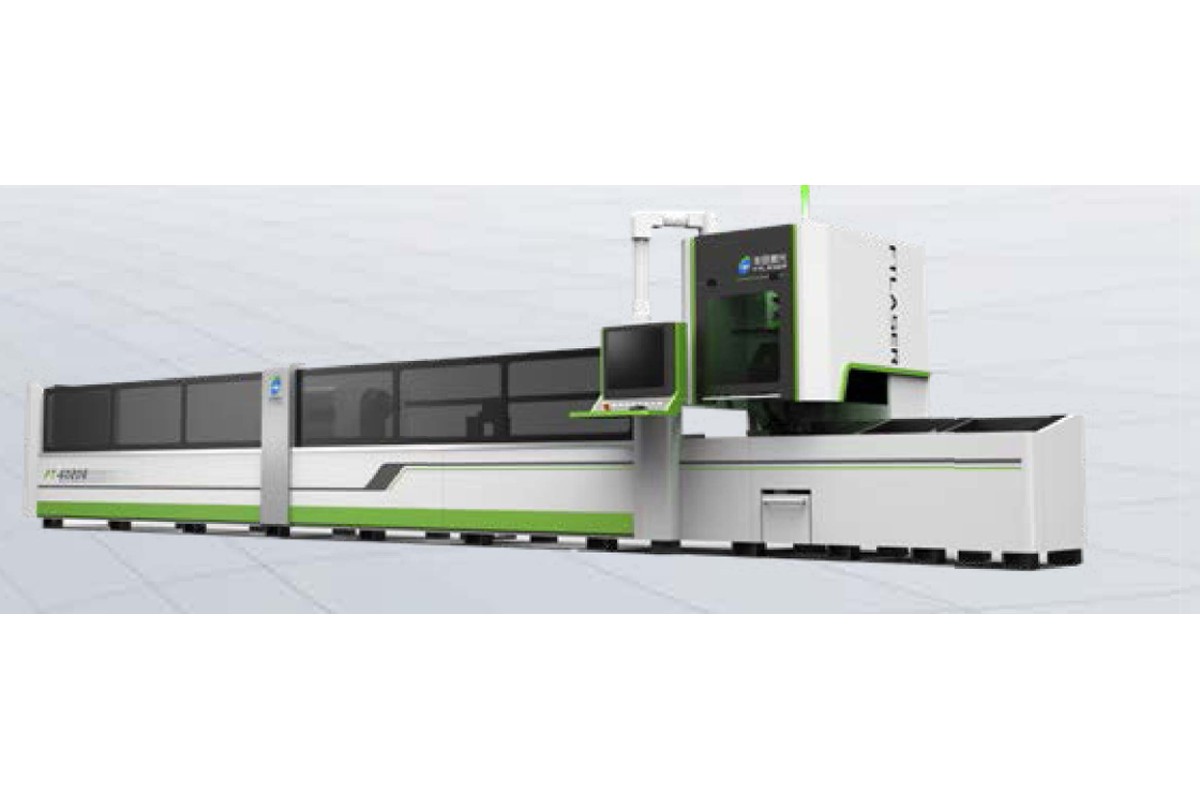
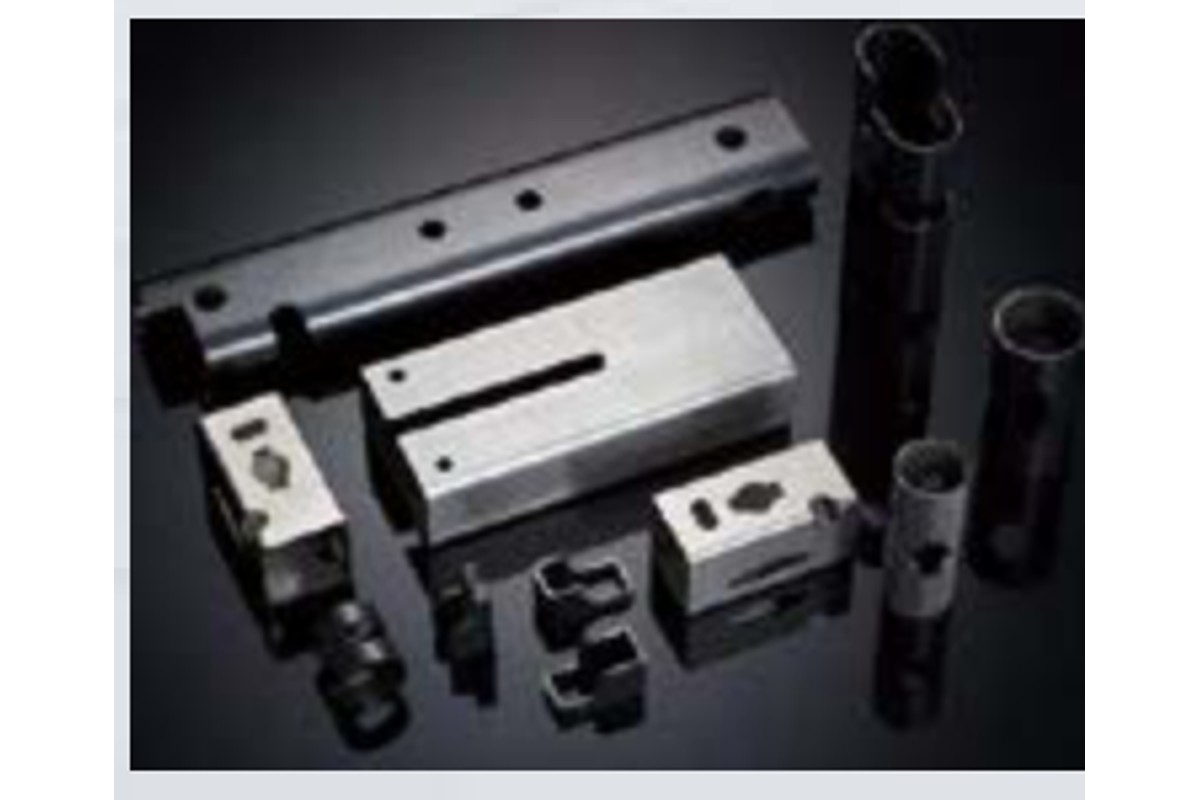
Images are taken from the product catalogue. Application examples illustrate possible component types; they are not sample-cut acceptance records.
Technical Specifications
| Product model | FT-6024GZ |
| Catalogue length configurations | 6 / 8 / 10 / 12 m; confirm selected machine |
| Laser power options | 3000 / 6000 / 12000 / 20000 W |
| X/Y positioning accuracy | ±0.03 mm |
| Maximum acceleration | 1.0 G |
| Maximum running speed | Up to 50 m/min |
| Listed electrical supply | 380 V, 50-60 Hz |
| Profile capacity and load | Confirm chuck range, section size, tube mass and support arrangement |
Specifications above follow the catalogue configuration. Final dimensions, component selection and utilities must match the confirmed order. Running speed is not a guaranteed cutting speed; positioning accuracy is not a blanket finished-part tolerance.
From Separate Tube Operations to a Defined Cutting Route
The FT-6024GZ is relevant when a tubular part needs more than a straight saw cut. Holes, slots, end profiles and locating features can be reviewed together in the part program. Typical projects to assess include frames, fitness equipment components, fabricated supports and other tubular assemblies shown as application examples in the catalogue.
Before assuming operations can be combined, identify what the drawing requires after cutting. Some holes still need drilling, tapping or machining to meet their fit or surface specification. A tube laser proposal should explain which features are completed by laser cutting and which remain downstream. Compare the entire route through to an accepted assembly rather than counting machines removed from the workshop.
Length Is Only One Part of Tube Compatibility
The catalogue lists 6, 8, 10 and 12 m tube-length configurations across the GZ offering. That does not mean every FT-6024GZ installation handles all those lengths. Specify the longest purchased stock, shortest finished part, required loading method and space available at both ends of the machine. Obtain the exact supported stock and processing lengths in the quotation.
Also provide the section drawing, outside dimensions, wall thickness, material grade, mass per metre and straightness condition. Confirm the chuck clamping range, supported profiles, tube load and support arrangement. The numerical model suffix alone is not sufficient evidence of a maximum tube diameter. Review round, square, rectangular or special profiles individually with the supplier rather than assuming identical capacity.
Power Selection for Wall Thickness and Feature Geometry
The listed laser options are 3, 6, 12 and 20 kW. Select power using the walls and materials you process most often, with particular attention to small openings, corners and end features. A large outside tube dimension does not necessarily require the same laser power as a thick wall. Request a process trial for the combination of section, wall and geometry that determines your quality requirement.
For carbon steel or stainless steel tube, agree on the edge finish, internal spatter condition and cleanup allowed before welding. The gas and recipe must suit the job. Our overview of laser cutting assist gases explains the underlying process choices; the tube trial must additionally check the opposite wall and internal surface where relevant.
Support, Clamping and Part Release
Long, slender tube can move differently from a rigid short section. Ask how the quoted support system maintains alignment during rotation and feeding, and how adjustments are made for different profiles. Thin-wall tube can be sensitive to clamping force and support position. Include the surface condition and any cosmetic requirements when requesting a demonstration.
Inspect how the final component is released and collected. A technically successful cut can still be unsuitable if the part falls, dents, scratches or requires awkward manual retrieval. Specify the shortest and longest finished parts and review the discharge route. Ask whether any automatic loading or unloading equipment is included; do not assume automation from the machine photograph.
Nesting, Remnants and Cost per Accepted Part
Ask for a nesting study using your normal stock lengths and part families. Record the usable remnant, required clamping reserve, cut sequence and number of accepted pieces from each tube. Avoid treating a theoretical nesting result as an unconditional zero-waste promise. The remnant depends on the chuck arrangement, part geometry and operating sequence.
Add setup and changeover time for different sections, loading, cutting and collection. Maximum running speed is a motion specification rather than a finished-part output rate. A useful cost comparison includes gas, electrical power, consumables, stock utilization and downstream welding or fitting work. This is especially important when replacing a saw-and-drill route with a programmed tube process.
Sample Trial and Assembly Acceptance
Select a representative part with features on more than one face where applicable. Measure hole-to-hole spacing, end geometry and orientation after cutting. Check for tube deformation, internal spatter and edge cleanup. Retain the material and program details so the trial can be repeated. Where the part mates to another component, include a real fit-up check.
The positioning specification is not a complete tolerance guarantee for all rotary profiles and tube conditions. Agree on the inspection datum, how rotation is referenced and how finished dimensions are measured. When comparing this configuration with the wider product range, review our tube laser cutting machine series overview and request the specific limits of each proposed machine.
Frequently Asked Questions
Does the machine include bevel cutting?
Do not assume it. Submit the required bevel angles and weld-preparation geometry and request written confirmation of the head, motion and software capability in the quotation.
Can it handle special profiles?
Send a cross-section drawing and sample information. Clamping, support, rotation clearance and programming must be reviewed together for that profile.
Will the tube go directly to welding?
That depends on joint fit, edge condition and the welding specification. Approve a cut-and-fit sample and include any required deburring or cleaning in the production route.
Request a Matched Tube Cutting Proposal
Send section drawings, material grades, wall thicknesses, stock lengths, part files and monthly quantities through our tube laser machine quotation page. Include the preferred loading method, maximum tube mass and available workshop length. Ask for confirmed capacity, remnant assumptions, support and collection details, utilities and an agreed sample-cut acceptance plan.