
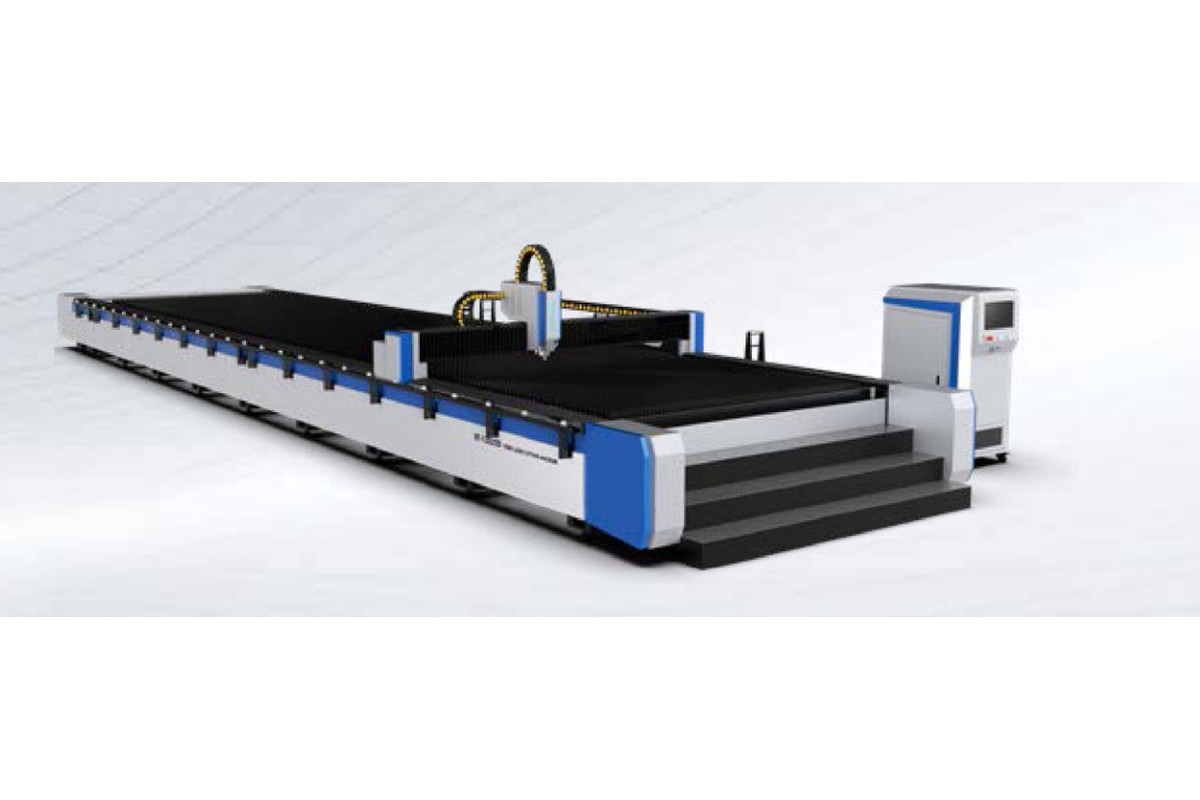
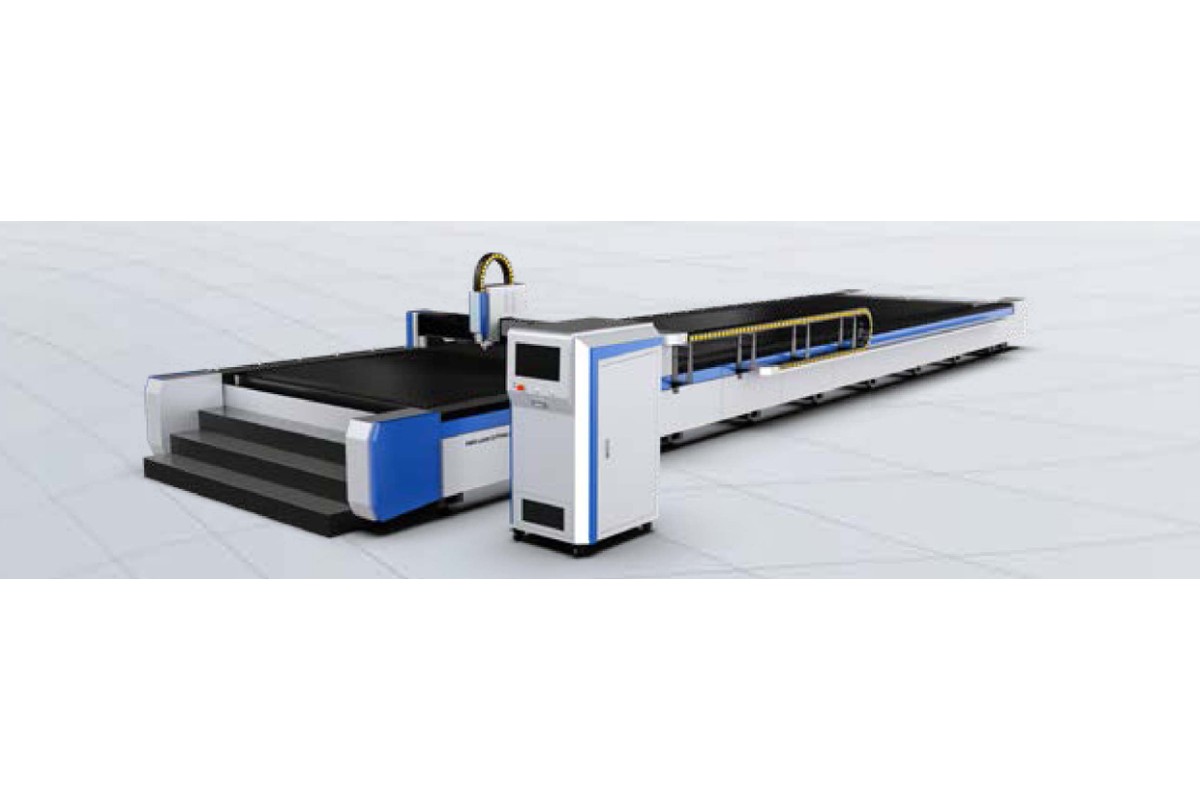
FT-12025D Fiber Laser Cutting Machine
The FT-12025D is a large-format fiber laser cutting machine with a catalogue working area of 12030 x 2520 mm. It is a candidate for fabricators whose long plates, extended profiles or large nested layouts do not fit a conventional sheet-cutting bed.
| Working area | 12030 x 2520 mm |
| Laser power options | 6000 / 12000 / 20000 / 30000 / 40000 / 60000 W |
| Maximum running speed | 100 m/min |
Images are taken from the product catalogue. Application examples illustrate possible component types; they are not sample-cut acceptance records.
Technical Specifications
| Working area | 12030 x 2520 mm |
| Laser power options | 6000 / 12000 / 20000 / 30000 / 40000 / 60000 W |
| Maximum running speed | 100 m/min |
| Maximum acceleration | 1.0 G |
| X/Y positioning accuracy | ±0.03 mm |
| Transmission | Gear rack |
| Listed machine weight | 12000 kg |
| Listed electrical supply | 380 V, 50-60 Hz; confirm selected configuration |
Specifications above follow the catalogue configuration. Final dimensions, component selection and utilities must match the confirmed order. Running speed is not a guaranteed cutting speed; positioning accuracy is not a blanket finished-part tolerance.
When a Long Cutting Bed Changes the Job
The FT-12025D addresses a format problem before it addresses a speed problem. Long covers, equipment panels, structural flat components and extended profiles may need additional setups on a smaller bed. A larger working envelope can allow a different nesting and handling plan, but the benefit depends on the dimensions and mix of your actual jobs.
Compare the complete manufacturing route. If a component is currently divided into sections, check whether the drawing allows a one-piece blank and whether bending, machining, transport and assembly can accept it. A longer laser-cut blank has little value if the next operation cannot handle the same length. Include those downstream limits in the project review.
Working Area, Plate Size and Loading Plan
The catalogue lists 12030 x 2520 mm as the working area. Confirm usable cutting travel, sheet positioning allowances and support requirements on the final layout. Do not treat the machine weight as the permitted plate load. Obtain the allowable material load and any restrictions on plate thickness or weight distribution for the exact machine being quoted.
Long plate handling needs a defined route from storage to the bed and from the bed to the next operation. Review crane or lifting equipment access, clearances, sheet support and the collection of narrow or flexible offcuts. Ask whether a complete sheet, a large skeleton or individual parts will be removed first. These choices influence both cycle time and the space needed around the machine.
Choosing the Power Level for Real Production
The catalogue offers power options from 6 to 60 kW. This is a configuration range, not a statement that every order includes the highest-power source or identical auxiliaries. Compare the grades, thicknesses and part geometries that account for most of your production. Ask for an itemized laser source, cutting head, cooling and gas package for the selected power.
Assess the ordinary production thickness and the occasional maximum separately. A successful separation cut does not establish a repeatable production recipe with the required edge finish. Higher power also changes the demands on electrical capacity, cooling, extraction and gas delivery. Evaluate those installation costs together with the expected output rather than comparing source power alone.
Acceptance Across a Large Working Envelope
For long components, include features near both ends of a representative drawing. Agree on how straightness, feature spacing and outside dimensions will be measured after cooling. Where your quality plan requires it, test comparable geometry in different bed locations. The positioning figure in the specification table does not replace an acceptance method for a twelve-metre part.
Use an agreed drawing revision and record the material grade, flatness, thickness, gas and processing setup. Inspect corners, entry points and the underside as well as long straight edges. If holes or mating profiles are critical, review our guide to kerf compensation for holes and outside profiles and establish the actual process allowance during the trial.
Utilities, Extraction and Workshop Layout
Request a foundation and installation drawing before planning the floor space. Include the machine envelope, laser and cooling equipment, service aisles, plate staging, electrical cabinet access and lifting routes. Confirm the foundation requirements, permitted floor loading and anchoring arrangements with the supplier for the final configuration.
The listed electrical voltage is only one part of the utility requirement. Obtain total connected load, supply protection requirements and the demand of auxiliaries. Specify the assist-gas flow and pressure needed at the nozzle under production conditions, not only the pressure at the storage tank. Review extraction coverage along the full cutting length and the procedure for cleaning the bed and removing accumulated scrap.
Compare Full-Nest Productivity
Break the job into loading, alignment, piercing, cutting, unloading and sorting. A large nest may save setups while creating a larger unloading task. Record the complete cycle and accepted parts produced. Maximum running speed cannot be multiplied by plate length to obtain a reliable cutting cycle.
For smaller routine sheets, compare whether a conventional format could meet the workload with less handling infrastructure. Our single-platform sheet laser cutting machine overview provides a useful checklist for the common-format alternative. Choose the longer bed when the component sizes and production route justify it.
Frequently Asked Questions
Can one operator handle the largest plates?
Staffing depends on the lifting method, sheet mass, access and risk assessment. Define the handling system and operating procedure before assigning labor assumptions.
Is the listed machine weight the shipping weight?
No shipping plan should be based on that figure alone. Request the final packing dimensions, individual package masses, lifting points and unloading requirements for the actual order.
What should the quotation include?
Ask for the selected power and components, usable working area, plate load limits, utilities, extraction, installation, training and acceptance scope. Identify optional equipment explicitly so bids can be compared on the same basis.
Send Your Long-Plate Cutting Requirements
Use our large-format laser cutting machine enquiry page to send the largest plate dimensions, material and thickness mix, representative long-part drawings and monthly quantities. Include a workshop layout and details of the available lifting and electrical infrastructure. Request a matched FT-12025D proposal and a sample-cut plan based on the parts you intend to manufacture.


